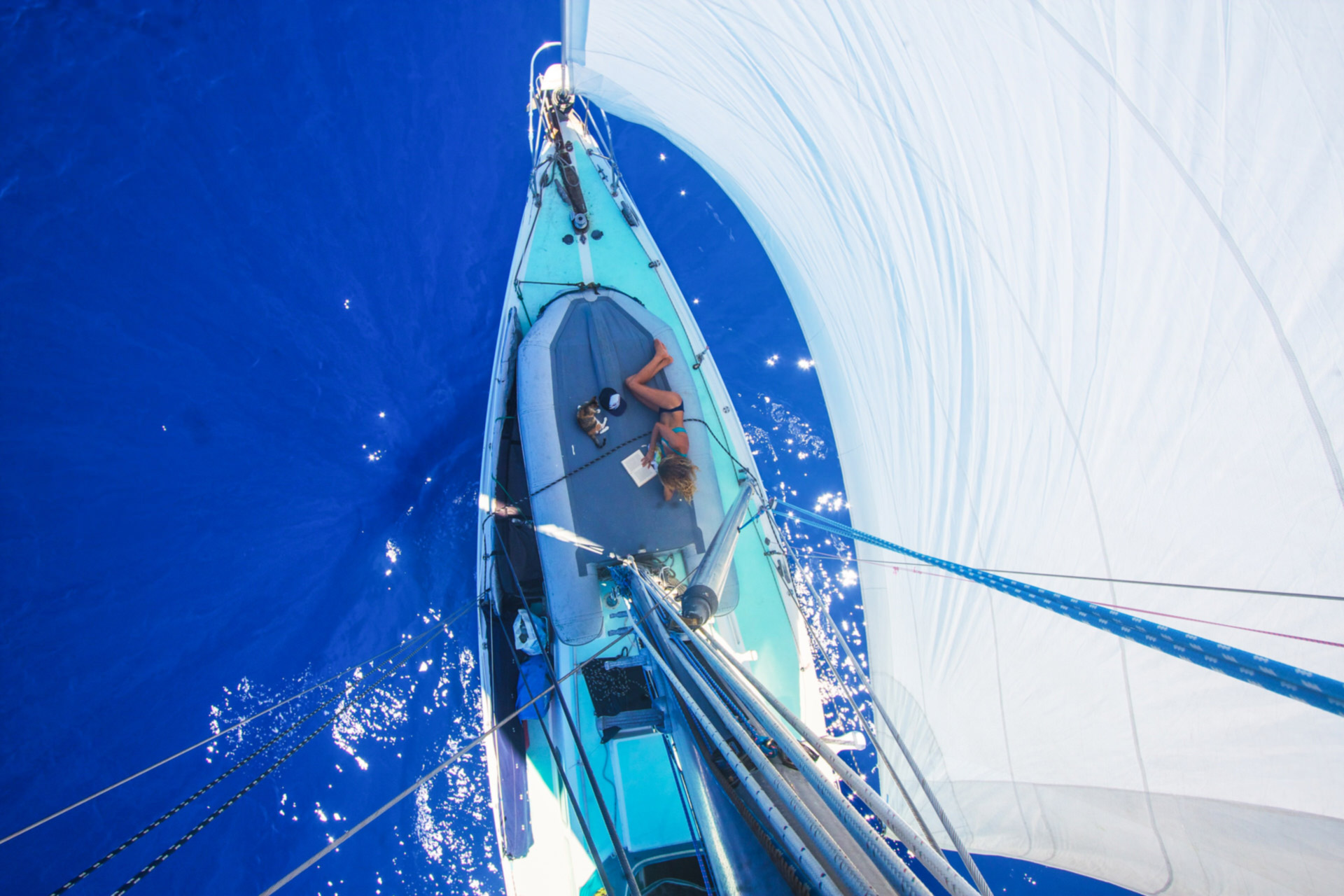


Gone Sailing…Hang with Thich


"The world of form and color is a miracle that offers blissful joys every day. After we have this realization, we cannot look at the blue sky and the white clouds without smiling." _Thich Nhat Hanh


I’m on a passage…not sure when I’ll find the world wide web again, so until then, I’m leaving you to ponder my favorite quotes from Thich Nhat Hanh’s early journals in Fragrant Palm Leaves:


“Clinging to what you have learned is worse than not learning it in the first place.” 

“Let compassion pour from your eyes and don’t let a ripple of blame or anger rise up in your heart.” 

“One is always the first beneficiary of one’s own good acts.” 

“They did not know that when the mind divides reality up, when it judges and discriminates, it kills paradise. Please do not scold the sunlight. Do not chastise the clear stream or the little birds of spring.” 

“Our eyes are filled with dust. There is no need to seek a Pure Land somewhere else. We only need to lift our heads and see the moon and the stars. The essential quality is awareness.” 

“Most important is knowing how to ride the waves of impermanence, smiling as one who knows he has never been born and will never die.”  “Begin by looking deeply at yourself and seeing how miraculous your body is…Consider your eyes. How can we take something as wonderful as our eyes for granted? Yet we do. We don’t look deeply at these wonders. We ignore them, and as a result, we lose them. It’s as though our eyes don’t exist. Only when we’re struck blind do we realize how precious our eyes were, and then its too late…” 

“If we want freedom, we must invite those phantoms up to our conscious mind, not to fight with them, like the old man fishing for snakes, but to befriend them. If we don’t, they will trouble us everyday. If we wait for the right moment to invite them up, we’ll be ready to meet them, and eventually, they will become benign.” 

“The best medicine to chase away the heart’s dark isolation is to make direct contact with life’s sufferings, to touch and share the anxieties and uncertainties of others.” 

“Life is simpler here, and it fills my heart with love…I’m not romanticizing poverty, but I have seen people in affluent societies suffer from loneliness, alienation, and boredom, problems unimaginable here.” 

“The destructive capacity of nonstop busyness rivals nuclear weapons and is as addictive as opium. It empties the life of the spirit. False heroes find it easier to make war than deal with the emptiness in their own souls. They may complain about never having time to rest, but the truth is, if they were given time to rest, they would not know what to do.” 

“Without fierce resolve and a mature spiritual life, private demons cannot be controlled.”

Share and Enjoy:
  • Facebook
  • email
  • StumbleUpon
  • Twitter
Posted in Captain Liz Clark and the Voyage of Swell | Tagged , | 2 Comments

Go to the Places That Scare You.

Hanging with the locals.


Renown for it’s sharky waters, I find myself pulling my feet up on my board during sunset surfs in this region…During another bout of bad weather, I was lucky enough to be able to tie to a charter mooring right in the middle of a pass, cozy and protected from nearly all wind directions…

This particular pass is home to 300 gray sharks!  Day after  day, I dove with the sharks, growing cautiously but increasingly more comfortable around them. And from my humble observations, they’re really not the voracious, unpredictable beasts we perceive them to be. The grays and black tips were curious, but easily spooked and not prone to lingering. The oceanic white tip I saw was a bit more daunting, (probably because it was a lot bigger than me!) but otherwise uninterested in my awkwardly bobbing American flesh. The lemon sharks are supposed to be more aggressive, but I only saw two and they stayed shyly distance and near the bottom, their beady little eyes scanning for grub…The grays often hung out in the deeper parts of the pass, swimming around Swell mostly early or in the evening hours. They all move in that slow, suspicious, inconspicuously sharky way– making wide circles, looking for sick or easy prey. In fact, sometimes they are so close to other fish and don’t attack? The healthy fish seem totally unafraid, like they know they’re not his target. In fact, I often thought they were a little lazy actually…that is until a school of grays went on a needlefish feeding frenzy one morning. I was quite happy to be aboard Swell at that moment…

Although none of these sharks are known for frequent human attacks, I felt less afraid knowing that with so many fish around (this pass is a new marine reserve!!), it seems unlikely that they would stray from normal feeding habits. Whereas, in areas where we have heavily overfished and polluted the ocean to the point that the shark’s normal diet is not readily available, a shark has more reason to taste different entrees…Or maybe surfers are just annoying–always having too much fun…?

In any case, it’s great to observe animal behavior. It makes you think about your own…

And like Pema Chodron says, it’s always growth-inducing to “go to the places that scare you.”

I certainly grew to trust my shark neighbors more this week, but I wasn't quite up for night swimming after fileting a freshly caught tuna on the aft deck!

Share and Enjoy:
  • Facebook
  • email
  • StumbleUpon
  • Twitter
Posted in Captain Liz Clark and the Voyage of Swell | Tagged , , , , , | 4 Comments

Rock, rock, rock, and roll…


We can't appreciate one thing without knowing it's opposite...strong winds and an unprotected anchorage made for really appreciating safety and sunshine!


A limerick or poem to describe three days of an unexpected storm front while at anchor…


there once was a captain named Lizzy

her hair turned greasy and frizzy

she couldn’t wash it

cause the boat rocked and tossed it

so now she’s both stinky and dizzy…


Wind has swung an to unpredicted South

25 knots and 35 miles of fetch

make for a wild ride here at anchor

Nothing to do but hang on!

Nothing to do but lie here…

Then go check the anchor ropes for chafe.

The clouds come roaring by

Gray and mean and angry

The rain stings

But the second anchor’s out

Go below and dry off

Read another book

Kinda nauseous, nervous

I’ll just lay here and stare up…

The food hammock swings and swings and swings

The walnuts are getting walloped

Bounce, roll, flop, jump

Creek, moan, thud, eeerk

48 hours and counting…

You tired yet, Wind?

Howl, howl, whistle…

Nature’s voice

Find the beauty

it won’t last forever

Patience, practice patience…

a time for everything.


Share and Enjoy:
  • Facebook
  • email
  • StumbleUpon
  • Twitter
Posted in Captain Liz Clark and the Voyage of Swell | Tagged , , | 2 Comments

Copra, the next olympic sport?

Copra, stacked to dry.


In the following weeks, I helped a local couple with their copra load, just to see what it entailed. I quickly understood why the local men were in such good shape…copra is their sport!


Picking up bits of conversations in the village, I soon understood that the guys who worked in copra had a silent competition going on amongst them.


“Phillipe had 30 sacks last month,” I heard one local tell another.


“Yeah, but his father helps him,” the other replied. “How many do you have right now?”


“I’ve got about 15 I think.”


My first day on the job, I realized that for Emil, copra was serious. He nearly always had more sacs than any of the other men in the village, and he wasn’t about to let his standing slip. I learned that each family also had their own secrets for making the work go faster. Emil had devised two sticks, one embedded with a metal hook that would stick into a coconut husk. He’d swing at the coconut, hook it with the stick in his right hand, then tap it against the stick in his left hand, making the coconut go flying through the air toward the pile of others. Once he’d gathered all the coconuts in one area, Vaiama went about lining them up in straight rows, so that when he came by with the hatchet, he could sling the hatchet over his shoulder, coming down on the coconut in one frightening swing after another, splitting each promptly in two, and then moving quickly onto the next without shifting his body orientation. He’d maniacally split more than 50 coconuts without stopping. Vaiama went along quietly behind him, turning and stacking the coconuts, husk up, to dry. The weather looked suspect, as if it might rain…this way they wouldn’t get wet.


A few days later, the dried meat was ready to be scraped out of the husk. They had a special tool, almost like a pie slice, that helped scoop the dried meat out of the husk.  He and a friend set to work, husking coconuts like there was no tomorrow…


I was happy to be assigned the task of burning all the empty husks left behind. I walked alone among the palms, moving the fire from one pile to the next by lighting a dried palm frond on fire, then walking it to the next heap and piling a few husks on top.  I returned a smoky, sweaty, ash-ridden mess a few hours later…but I never imagined how much fun I could have playing with fire!


My job, playing with fire!


The guys were still hard at work when I wandered off to take a swim…Vaiama and I then loaded the burlap sacs with the dried meat, about 130 lbs each, and then sewed them up with twine. We all worked until dark, when the no-nos started biting and I ran off for a shower and long pants…


The day the cargo ship came, the locals from the village filtered in, bringing their loaded copra sacs to the quay for sale. Emil, head down, unloaded sac after sac from his boat as the other locals watched and counted. Finally finished, another local came over to congratulate him, but most of the others just sat across the way, muttering between sips off their Hinanos. It appeared that this month, Emil held his standing…

Copra sacs, waiting for pickup..

Share and Enjoy:
  • Facebook
  • email
  • StumbleUpon
  • Twitter
Posted in Captain Liz Clark and the Voyage of Swell | Tagged | 1 Comment

The Great Shark in the Sky

So many different ways to see the same sky...


Matai’s presence was commanding. He towered over me upon introduction by ‘Auntie Mary’, a local friend I’d made on the outskirts of the atoll. It wasn’t only his height and solid, muscular girth but his staid demeanor. He looked like a Puamoutu version of Hulk Hogan.

“Matai is our local weatherman,” Auntie Mary said. “We get his forecast whenever we’re going to start our copra.”


Weatherman? My ears perked up. At the right break in the round of sunset conversation, I gently posed Matai a few questions…


At 57 years old, Matai had spent his whole life living on this atoll. His land was family land, passed down for generations upon generations. His work was the same as his father’s, and his father’s father’s, and most of the other families in the atolls for that matter—copra. Until the recent lack of fish in the Society Islands, copra was the atolls’ biggest resource and export. For more than a hundred years, the French have sent ships through the atolls collecting copra for sale to the oil refinery in Tahiti and beyond. Basically, the locals collect the dried brown coconuts fallen from the trees, split them in half with a hatchet, and leave them in the sun to dry for about 4-5 days. Once dried, the meat is removed from the husk and loaded into bags for sale to the next cargo ship.


Matai’s father taught him how to read the weather, so that he could be sure to cover his copra if it looked like rain was on the way. Wet copra rots and mildews, rendering it unsellable. Plus, when he was young, they navigated the lagoon on dugout outriggers with sails and even sailed to Tahiti in similar, bigger outrigger canoes, so understanding local weather was part of survival.


“Every morning around 4:45 am, I get up to look at the sky. This is the most important time to read the weather. If the sky glows orange along the horizon that means the weather will be nice. If the colors are flat and gray with tall clouds, the maramu winds are coming and you better go cover your copra.”


Hmmm, I figured that was good motivation to get out of bed a little earlier than usual…


“Look…over there, the bright star two hands up from the horizon…that’s the star for Tahiti. We followed that star to go to Papeete. And there…” He said, pointing up at the Milky Way starting to pop out of the darkening sky overhead…”That’s the ‘Great Shark’ (Ma’o). The shark crosses the sky from north to south when the wind blows from the east, if it changes, that means the wind has changed direction and we would adjust our course.”


I knew he was referring to ancient local navigation. They used the night sky as their chart…A notion that filled me with respect…The thought of navigating these atolls at night, without a chartplotter, made my knees a bit weak.


The next morning I woke up at 4:30 and poked my head out of Swell’s cabin. The ‘Great Shark’ was partially under the horizon, its tail sticking up across the black part of the sky. I sat and wondered what other cultures called the ‘Milky Way’ as the ‘Shark’ faded out of sight and the horizon to the east glowed a neon orange.


“Looks like I can leave the hatches open today,” I thought, pushing back into my first downward dog…


Sunrise over reef.


Share and Enjoy:
  • Facebook
  • email
  • StumbleUpon
  • Twitter
Posted in Captain Liz Clark and the Voyage of Swell | Tagged , , | Leave a comment

More to the Ciguatera Mystery…


Arriving at an atoll farther east, I brought my empty water bottles ashore and asked a local at the quay if he knew where I could fill them…He pointed me to the town hall building across the street where there was a tank with rainwater.


“And do you know which fish are safe to eat here?” I asked.


“None.” He replied. “Don’t eat any fish close to the village.”


“Really?”


“Yes. About 3 years ago, a cargo ship offloaded 50 sacs of fertilizer here. They sat on the quay in the rain for a week before the shop owner came to pick them up. Ever since then, little by little, all the fish here have ciguatera.”


“Wow,” I said. “What do people here do for fish?”


“It’s tough. We either have to buy fish from fishermen on the other atolls who come here, or go fishing on the very south end of our atoll, almost 35 miles away…”


So apparently, the fertilizer leached into the lagoon from the sacs and caused a bloom of ciguatera algae, which then worked its way up the food chain into all the lagoon fish!


…One simple human error with heavy costs for the local population…

“Well,” I thought to myself. “….At least the fish will get a break from being overfished!”

And I wandered off to refill my bottles…


The fish don't seem to mind...


Share and Enjoy:
  • Facebook
  • email
  • StumbleUpon
  • Twitter
Posted in Captain Liz Clark and the Voyage of Swell | 3 Comments

Biomimicry: Isn’t it about time we asked Nature?


What can we learn when we stop thinking of ourselves as the smartest species on the planet...?


I may be behind on the subject, but I recently came across an interview of Janine Benyus–specialist on biomimicry, as she coined it–a concept that instantly inspired me! She’s written many books, but one called Biomimicry: Innovation Inspired by Nature, and since it’s publishing, has become a teacher for engineers, designers, chemists, architects, city planners, and inventors on how to use nature’s genius to create sustainable, efficient designs.


When confronted by any problem, she recommends humans look to nature for solutions. In addressing energy dilemmas, she explains, “For the most part, life operates on very small amounts of energy. When you look to the natural world, you see that organisms do not use high heats or high pressures or toxic chemicals to achieve their ends. A few do use toxins, such as venoms, in small amounts, but none heat up anything with explosive force… Nature really knows how to use energy efficiently. An insect, for instance, has a protein in its wing called ‘resilin’. As it flaps the wing down, the resilin compresses like a spring and stores 98% of the energy from the downward thrust. So the insect doesn’t lift the wing; it just rides the expansion of the ‘spring’…”


In respect to water issues, she explains how mangroves extract fresh water from salt water using only solar energy. Or refers to one amazing beetle in the Namib Desert, where there is no groundwater. The Stenocara beetle goes to the top of a ridge in the early morning and lifts its wings, which are perfectly designed to catch water molecules out of the air. The tiny water droplets collect on the scales of the wing until gravity rolls a water droplet down into his mouth. Incredible!  This process is now being replicated in sheets that collect water out of air…


When will we come to "see nature not as a resource but as a sentient master.” ?


She gives other examples, including designing buildings in Arizona with pleats, like those of some cacti, which actually keep the building cool by providing it’s own shade. Adhesives that mimic those of a gecko’s feet, and solar cells based on photosynthesis with a film on top that mimics a moth’s eye, or the humpback whale’s pectoral flipper being used in wind turbine design. And creating fabrics, roofing tiles, cement, glass, and paints that ‘self-clean’ using the design of a lotus leaf’s ‘nano-bumps’ which makes it very difficult for dirt or dust to adhere.


Her approach to helping humans achieve sustainability appeals to me wildly, as it combines technology with an awe and respect for nature—surely the only way out of the mess we’ve created. “Biomimicry,” Janine explains, “is as much about having a new outlook as it is about designing new technologies. I don’t think new technologies alone will save us. What will get us through the evolutionary bottleneck is a change of heart, which will come about when we begin to see nature not as a resource but as a sentient master.”


We can all pitch in with this simple change of heart…Thank you, Janine, for your brilliance, your foresight, your courage and your pursuit of a better way!!


Check out AskNature.org!!


This blog is based on the interview in, The Sun magazine, September 2009, Issue 405. Anyone with updated info on this field or who has read Janine’s book, please post!


Share and Enjoy:
  • Facebook
  • email
  • StumbleUpon
  • Twitter
Posted in Captain Liz Clark and the Voyage of Swell | Tagged , , , , | 2 Comments

The Preservation of Exploration

Empty waves are endangered!


I often get emails asking why I don’t put my exact location on my website. I’ve never directly addressed the question, so here I’d like to briefly share my reasoning…


Some of the finest moments on my voyage have been those where I discovered a spectacular place, a wave, a waterfall, a lovely stretch of beach, etc–without the aid of a guidebook or waypoint. With all the technology and access to information we have in this day in age, surprises are limited. Most of the world is mapped and defined. We must go farther and farther to get off the beaten path. For someone who thrives on adventure, exploration, and pure experiences in nature, the wild world is endangered.


If the traveler who came before me left the place as they found it, my experience of stumbling upon a spot remains pure and unchanged. Because this kind of occurrence delights me so much, I strive to do the same, leaving as little impact as possible for those who come after me. In my opinion, it would be horribly selfish to hand out all the best spots and leave everyone else with a boring marked trail to follow! Nor do I want to be the reason for a surf camp or hotel popping up a few years later…there are already enough of those. My blog is for inspiration, not a ‘how to’…Figuring out the ‘how to’ is what makes life exciting! I think those that go without an exact destination and without expectations, always find their own special way.


Photographer and friend, Jeff Johnson (of 180 South), told me a fitting story once. In 1985, climbers Yvon Chouinard, Rick Ridgeway, Doug Tompkins, and itinerant cartographer Gerry Roach had been commissioned by National Geographic to explore a remote valley in Bhutan. Their objective was to climb the highest unclimbed mountain in the world, a 25,000 ft peak allegedly called ‘Gankar Punsum’. Because virtually no one from the outside world had visited the area, they had no idea where it was or how to find it. Some locals pointed them in the direction of some nearby mountains and after a month and a half of trekking and climbing, they ascended a 21,000 ft mountain only to see the peak of ‘Gankar Punsum’ far off in the distance. Resigning to the fact that they wouldn’t make it there on that trip, they remained in that valley, mapping and exploring for another few weeks. On their last night, all the guys sat around the campfire.


“What a great trip,” said Rick.

“Except for one thing,” Yvon replied.

“What’s that?” said Rick.

“The maps!” said Yvon.

“What’s wrong with the maps?” asked Rick.

“I think we should leave this place just as we found it,” said Yvon. “So the next people that come here will have the same experience.”

“What should we do?” asked Rick.

“Burn Em!” Yvon declared.


Gerry Roach, climber and itinerant cartographer, had worked tirelessly gathering details for the maps that were to be handed over to Nat Geo upon their return. But he understood, went to his tent and brought back the maps…


Broad grins aglow in the firelight, all four of them tossed the maps into the fire…


“National Geo was pissed.” Jeff finished, “But how classic! After all, aren’t the names of the best places in the world not found in magazines or newspapers but whispered in dark corners and written on the backs of soggy bar napkins?”


I couldn’t agree more. And so I sail on in this spirit…


Let it be...


Share and Enjoy:
  • Facebook
  • email
  • StumbleUpon
  • Twitter
Posted in Captain Liz Clark and the Voyage of Swell | Tagged , , , , , , , , , | 6 Comments

You’re my hero, Roz!

The hero herself...

Roz Savage, 43-year old ocean rower and eco-campaigner is my hero. She recently completed rowing the Indian Ocean, making that the third ocean she rowed across over the last few years–Atlantic, Pacific, and now the Indian! All to raise awareness about the impending environmental crisis we face as humans…

I followed her crossing as much as possible throughout my own adventure, floored by her dedication to her cause–Planet Earth–and her ability to blog so consistently and intelligently while in a rowboat on the open sea!

Here’s what she said in Maritius, after more than 5 million oar strokes across 3 oceans:

“On the ocean, it’s clear that I have to keep showing up day after day and sticking my oars in the water if I want to get to where I’m going. It’s the same with any big challenge, including the environment. We all have to start living more sustainably, and keep up those good habits day after day, if we are to correct our course for a cleaner, greener, brighter future.” –Roz Savage

Huge congrats to you, Roz! We all owe you sincere thanks for sticking up for Planet Earth! May we all start making are own sorts of ‘oar strokes’ for the Earth along with you…


Next time you're in Target, ask yourself...do I really need this plastic thingy?

Share and Enjoy:
  • Facebook
  • email
  • StumbleUpon
  • Twitter
Posted in Captain Liz Clark and the Voyage of Swell | Tagged | 1 Comment

Nocturnal for a Night: Shine-eyes and rock pillows

All decked out in my lobstering get-up!


No one put more wood on the fire, which I interpreted as a sign that we’d be going soon…Not home, not yet. Tonight I’d be following my local friends out to the reef to look for lobsters.


Makae made no grand announcement. Just stood and gathered his gloves, then donned his homemade jerry jug backpack. It must have been near midnight. The moon was much brighter than my headlamp so I turned it off and let my eyes fully adjust to the night as the brisk walking awakened me. I was excited! I’d never walked the reef at night and as much as I knew I was going to feel sorry for the lobsters, I knew that Makae and Steven respected them–never taking lobsters below the size limit, and never taking females with eggs. This was their stretch of reef from which to live and to nurture, and they’d already witnessed what happened to their neighbors’ reef–those who had taken too much. Their was little left, few lobsters and no coconut crabs…In fact, the coconut crab, native only to this region and known for its delicious meat, is extinct on nearly every heavily populated ‘motu’ or atoll island in this region…:(


They moved quickly over the reef ahead of me like nocturnal reef creatures themselves, but I imagined that they’d followed their father and uncles down this same stretch of reef for probably twenty years…


The night air was cool and still; the trades were taking a break. The sea rose and fell gently out to the horizon–smooth, silvery, undulating—a glorious night to be at sea. Once my eyes had adjusted, I could see almost like daytime. Without the piercing sun, I felt free as if I could walk for miles…and that we did. As we got out on the reef where the waves washed over our feet, I felt the rhythm of the sea and dropped a ways behind…there were crabs of every color and shape and size, big pinchers or small, fat and squatty, or lanky and quick. All fit for battle and equipped with grippy little hairs on their legs to hold to the reef as wave after wave pounded over them. I’d bend my knees and brace myself for the hit, while they just carried on with their munching, popping their eyes up at me from the same spot when the wave had washed back to sea. There were spotty eels and lithe-legged brittle stars and urchins waving at me with their spines. There were cowries as big as soap bars, hermit crabs just as girthy, and a myriad of fishes swirling about…each species, each individual going about their own business, and at the same time ‘turning their cog’ in the greater reef ecosystems’ fine-tuned balance. I marveled thinking that all these visible creatures were only the very tip of a vast pyramid of reef biomass starting as micro-miniscule bacteria, archaeans, protozoans, algaes, corals, and such…


I looked back. My mast light was long out of sight and I had to halt my observations if I was going to catch up to my guides…Running was no option. Only careful placement of foot would keep me from taking a spill or re-injuring my knee on the sharp, slippery reef…


When I finally caught them, I could see they were well on the way to a decent catch.


“How do you see them?” I asked once I finally caught up.


“Come here,” Makae said. “Look where my light is, you see the little reflectors? Those are their eyes…”


“You’re going to reach in that hole?” I questioned. “What about eels?”


“The eels and lobsters don’t like each other. If you see the lobsters are there, it’s safe to reach in…but no eyes, no put your hand in! I already learned that!” He said showing me a scar on his right pointer finger, which I assumed was an eel bite…


“Oh…” I said. That seemed reasonable enough.


“What’s that?” I called, as his bright light passed over something marvelously colorful in a hole in the reef.


He moved the light back…“Parrokee, sleeping.”


I peered in the hole, and there on its side, was a foot-long parrot fish! I couldn’t understand how he’d gotten in there, or more importantly how he would ever get out, but he didn’t seem the least bit bothered. This was one tired fish…The light didn’t phase him. Steven even reached in and stroked his side, and the little guy just kept on sleeping like he had the plushest rock pillow in all of Polynesia. It made perfect sense, the parrotfish did his coral grazing in broad daylight and he was certainly safe from predators in the coral crevices…

Shhhhhh...parrotfish sleeping!


“Look, they’re all over…” Steven said, shining his light on a few smaller parrotfish cousins, all snuggled into their own nearby holes. Amazing!


“There, Liz, grab that lobster! Take the antennae!”


Just 6 feet to my right, his eyes twinkled in Makae’s light…


I didn’t really want to…but I knew I had to…I moved slowly over, reached in, felt the brush of his antennae, and pulled him out…


He flapped and flapped his mighty tail, making a terrible sucking sound. I winced but held on tight and tossed him into Makae’s bin before I knew what had happened…


They cheered and we carried on…


The first light of dawn was just tinting the horizon as we returned. For the last mile, I was draggin my boots…kinda wanting to crawl in a reef hole and rest my head on a coral pillow like a parrotfish!


Custom lobster backback...Lobsters so big we could eat the legs!


Share and Enjoy:
  • Facebook
  • email
  • StumbleUpon
  • Twitter
Posted in Captain Liz Clark and the Voyage of Swell | Tagged , , , | 1 Comment