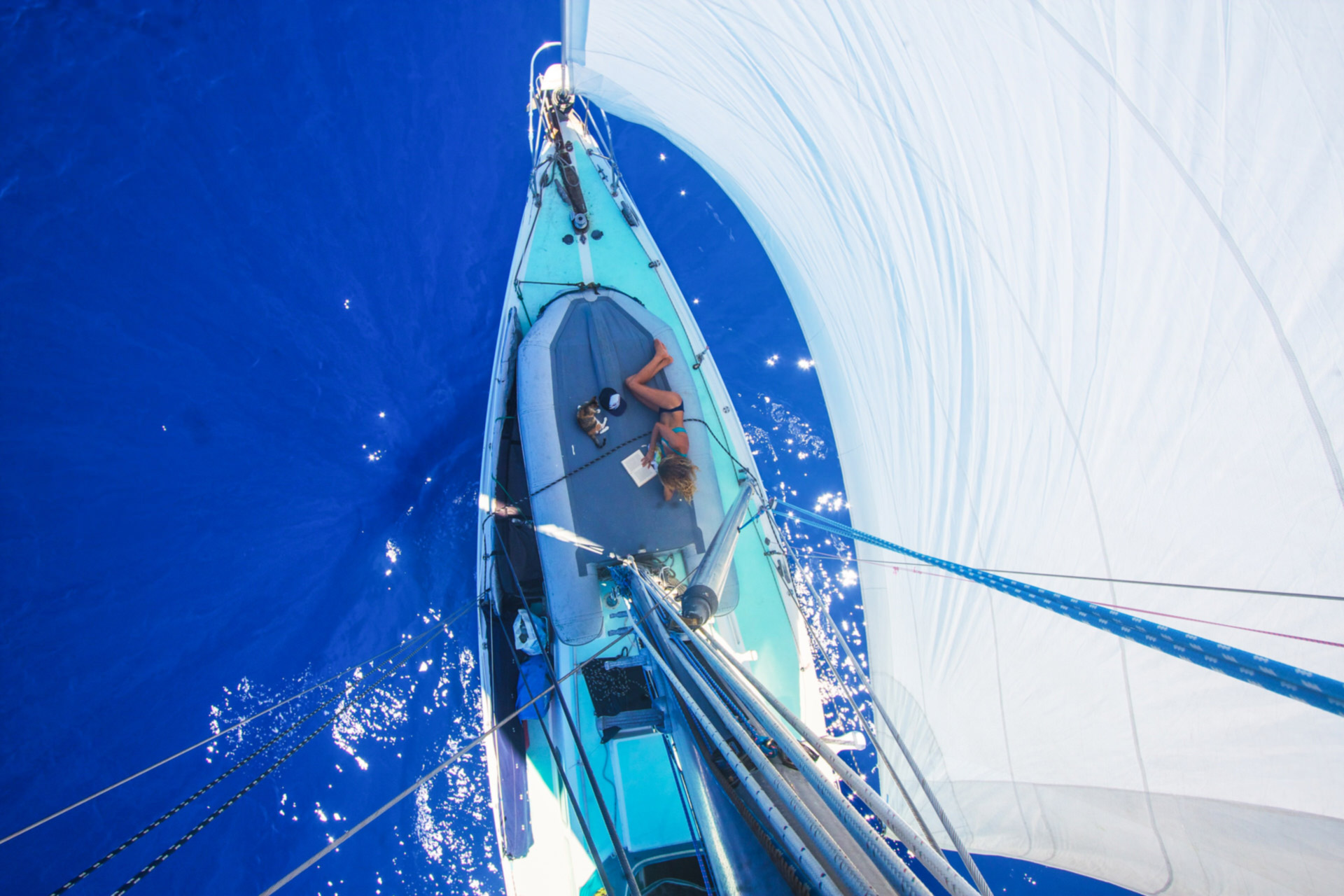


Your Mother’s Calling…

Simply respecting all life on Earth makes us a part of something GREAT!


Even way out here, I rarely feel that ‘far away’ from humanity anymore. Not only is there plenty of plastic as a human reminder on the beaches, but we have so many amazing ways to connect and be involved in each other’s lives without being physically together. This technology certainly makes spending these long stretches away from my family less difficult! But it seems when I’m in California, the amount of time we all spend looking at our phones hardly leaves us enough time to notice the weather!


The last few months have been somewhat of a pilgrimage back to the nature for me. With sporadic use of phones and internet…away from cars and advertisements…television and news…facebook and movies, I’ve noticed feeling connected to something that doesn’t require a 2-year contract for a phone upgrade—Earth! And I’ve begun to think we may really be missing out on something. I’ve asked myself over and over lately. What is it that I get from giving nature my attention? What is it that I crave about these faraway places, beyond uncrowded waves and unpolluted water? I’ve concluded that the answer is quite simple: I love to bear witness to wild Earth. It simply makes me feel good. There is an energy that I feel near wilderness—almost like I can hear nature resonating! But once we’ve chopped, cropped and paved, that energy seems subdued. There is simply a different feeling developed places give off…When I find a less human-effected corner of the earth, I feel like I’m witnessing the wild world rejoicing, sparkling, thriving, and flaunting it’s splendor–and I love it!! But these corners are so rare and even the farthest removed places on Earth are being destroyed by climate change…Will these atolls even be above sea level in a hundred years?


We have come a long way from moving at nature’s pace, and it seems to only be getting faster at an exponential rate. That makes sailing a small boat long distances rather special because you don’t have a choice but to work with nature, at nature’s speed. You must wait for the wind to change. You must feel the wetness of the rain and salt. You don’t have jet fuel to push past it…you have to work with it, understand it, give yourself to it. Being at the whim of nature is something we feel relatively little compared to the humans who lived before us. And despite that they missed out on flat screens and frozen yogurt, is there something much bigger that we in this era might be missing? Could it be that being close to nature makes us feel whole? Could it be that recognizing our connection to the rest of life, the elements, and the universal energy that makes all the electrons spin is good for us!?…I feel so good to be a part of such greatness!! Might it fill us with purpose and an intangible wealth to celebrate Earth’s diversity of life? To foster clean rivers, delight in teeming oceans, and see how much love we can bestow upon our Planet? Could it be that giving this love to nature automatically gives us something in return—something we can’t hold in our hands, but in our hearts?


I don’t think it takes a lengthy foray into the wilderness to experience this connection…it can be as simple as respecting the plants and animals that are native to your neighborhood. And just turning off your phone every once and a while to watch the clouds…


Share and Enjoy:
  • Facebook
  • email
  • StumbleUpon
  • Twitter
Posted in Captain Liz Clark and the Voyage of Swell | Tagged , , | 4 Comments

Long hours in paradise…

Rocky and Poppi do plenty of fishing themselves...


An atoll away from the site of my ‘big cry’, I found a little more reason for hope…Here was an atoll that had been inhabited by a single family for many generations. I spent some time getting to know Gaston and Valentine, 2 of the 5 people that still permanently live there. Working with some regional environmentalists, they’d agreed to dedicate their atoll as a part of a new program in French Polynesia called “BIOSPHERE”. They are attempting to institute marine reserves in select areas of each archipelago.


Gaston & Val...loading the last of their copra.


Gaston and Valentine’s bay is a perfect cut in the reef for passing sailboats to find shelter, so Gaston has installed 15 moorings in their bay to prevent damage to the coral from the anchors of visiting sailboats. Fishing is limited, too–mating seasons and size limits are respected in all sorts of sea creature harvesting. In turn, the lagoon is rich and teeming with mature fish of a variety of species. Life seems so resilient when given a chance!


Firi firi, traditional Puamotu Sunday bread in the making.


Umo Umo, the rescued frigate, gets his dailies.


Mariah, the Napoleon wrasse, waiting for hers...


These two are a truly hardy duo. Life really gets back to the basics out here. It was refreshing to see how relatively self-sufficient and sustainably they live. Valentine’s family has inhabited this atoll for as many generations as she can trace. She doesn’t want to move to Papeete, like many outer island people do, as she claims people in the city have become ‘too spoiled and have forgotten the beauty of their land.’ Her motu fills her with daily joy. Of anyone I know, Valentine embodies ‘living simply’. But don’t confuse ‘living simply’ with living easily! Atoll life is hard work! Only hard work and respect for nature keeps food on their plates, clean water in their rain catchments, and the relentless entropy of tropical regions at bay. There is no phone, no village, no corner store (…but they do have satellite television!?! ) Every meal must be prepared from scratch, every drop of water must be carried or pumped from the catchments, every fish must be caught, every leaf must be raked and burned, the pigs and dogs must be fed (and their pet Napoleon wrasse and frigate bird!), and the vegetable garden tended. And every day it starts all over again…


The pigs munching on lobster scraps.


Without easy access to buy things, I noticed that things we would consider trash, like water bottles and rice bags, get used thoroughly and then reused again for something else–a habit that our consumer culture and marketing schemes teach us NOT to do!? Every six months or so, a cargo ship makes a special stop to deliver them flour, rice, sugar, cooking oil, motor oil, gasoline for the outboard, diesel for their generator, and a select few other items. But other than that, nature provides. If they drink a coconut, the coconut meat goes to the pigs. Their food scraps or extra fish from the fish trap feed the bird, the wrasse, and the dogs. They really understand that they must live within the limits of nature, without taking too much. If only they had a plastic-to-oil machine, virtually nothing would go to waste!


What if we all used things as thoroghly as this scrub brush?!


Work hard, eat well...a good philosophy!


Valentine, with her relentless cheer, cooks up meals that have become legendary among passing cruisers. Her wit and resourcefulness stem from an a ingrained Puamotu toughness that she prides herself in…Beaming between kneading the bread dough, she recounts stories of growing up without rice and flour, and learning to dive to depths of over 70 feet with her father, who was one of the most respected natural pearl divers of his time. “My father was afraid to die before he taught me how to live,” Valentine explained. Unfortunately, he died before he was 50, due to the deep diving…But I seemed to think that her father was resting at peace. From what I gathered, Valentine had been paid attention.


Share and Enjoy:
  • Facebook
  • email
  • StumbleUpon
  • Twitter
Posted in Captain Liz Clark and the Voyage of Swell | 2 Comments

Better Must Come

The youth will inherit our mistakes...NOT fair!


A few days after the Napoleon breakdown, I went to talk at the elementary school in the nearby village, like I’ve been doing at various stops over the last few months. I give a presentation about plastic pollution its effect on marine life and use my sailing trip to help explain where currents and winds carry plastic that’s tossed in the ocean. I was thrilled to see that this island’s kids seemed especially bright and tuned in to the environmental basics…we even took an after school excursion to the village landfill!


Young minds expanding!


Talking trash at the village landfill...

Share and Enjoy:
  • Facebook
  • email
  • StumbleUpon
  • Twitter
Posted in Captain Liz Clark and the Voyage of Swell | 1 Comment

The Great Napoleon Breakdown


the mega fauna are usually the first to take the hit...


That same week I spent hanging out with the fishes under Swell, I watched locals return day after day to fish the same spot in the reef. I could see them hauling up Napoleon wrasses. This great wrasse is an instrumental reef species, which can grow to nearly 400 lbs! One of the old men in the village explained to me that the fishermen sell the fish to the passing cargo ships for the equivalent of 1 dollar a pound. The ships then resell them in Tahiti to restaurants for triple that or more–as there are relatively no Napoleon wrasses left in the Society Islands, they’ve been almost completely fished out. This contributes to the out of control population of ‘crown of thorns’, a starfish-like organism that feeds on live coral. The Napoleon wrasse is one of its few predators.


So on the fourth consecutive day of Napoleon massacring, my curiosity got the best of me and I went to talk to the fishermen. It was a father and son, obviously fishing for a little food and money their family. How could I possibly tell them they shouldn’t take so many of these fish…How could I say anything, having lived a life of so many blessings. How could I explain that the Napoleons are

excruciatingly sensitive to overfishing, and that it was likely that they could kill off their island’s population in just a few seasons of this kind of relentless killing…? I couldn’t. They wrestled three up from the bottom as I drifted beside their boat. They proudly lifted the floorboards to show me the stock of 6 or 7 others they had caught before I arrived. One was not even a foot long.


I gently posed the question, “Would it be good to leave some that will continue to reproduce?”


“It’s ok.” The older man said. “There are SO many,”


…so many that it didn’t matter… “Would it matter to their grandchildren?” I wondered.


As the day went on, I tried to get the Napoleon wrasse off my mind, but I couldn’t. The megafauna of an ecosystem are historically always the first to take the brunt of the human hunt. And if a species isn’t prone to being hunted for something to eat or sell, it falls victim to the next wrung of human negligence–habitat loss. If it isn’t edible or valuable, then bulldoze it’s home, poison its waters, because it isn’t useful anyway…It was this kind of thinking that got us where we are today, on the brink of species extinctions in every habitat the world over.


I’d seen the same scene–island after island, port after port. But for some reason this particular island’s situation brought everything into painful perspective. It historically supported a small enough population of humans, as to be able to feed the population without depleting the fisheries and was remote enough that selling fish to other regions wasn’t possible. But like the world over, once an area had depleted its resources, populations look to neighboring areas: Tahiti now looks to the Tuamotus to supply much of its fish. But will the Puamotu people realize before they’ve taken too much? How long before their islands were as fish-depleted as Tahiti? It seems like a horrible broken record I’ve witnessed playing over and over all over the world in varied environmental scenarios. Each comes with its own mixed bag of political, cultural, and economic differences, but at the core they all seem eerily similar…And with the way the world works and basic human nature, we still seem far from where we need to be to collaborate and produce long-term, sustainable solutions to these problems!


That night I sat up on the bow of Swell. Looking up at the wide atoll sky, I suddenly started to cry. My tears came first for the napoleon fish. And then for the other reef fish that would be sure to follow. And then I cried for the next generations, who might only see a Napoleon wrasse in a photo…Tears came rushing out for the children, not only here on this tiny speck of island, but also for all the world’s children…what kind of world will be left for them? And surely they will ask us why we didn’t take better care of the Planet…The tears snowballed into sobs…and I cried on into the night, because the Earth is slowly dying: its biological richness depleting, its rivers and oceans and skies choked with our waste, its wildness tamed by bulldozers and plows…And still, the majority of the humans are either ambivalent, feel too powerless to do anything, or lack education. And individually, most of us are just doing our best to get by everyday…so who’s really at fault?


The tears eventually subsided, but one thought stuck with me: No matter how humans came to control this noble planet, I am certain we have greatly misinterpreted our role as Earth’s most ‘intelligent’ beings, tragically overlooking our duty to be stewards rather than looters, of this unfathomably awesome orb of life.

Share and Enjoy:
  • Facebook
  • email
  • StumbleUpon
  • Twitter
Posted in Captain Liz Clark and the Voyage of Swell | Tagged , , , , , | 13 Comments

The Coral Question…


Coral reefs create living liquid masterpieces in motion!


I’m back!  Hope you all had a great Thanksgiving!! :)


The swell was running a few days late, leaving me plenty of time to spend with my underwater neighbors. The coral is alive just here below Swell. I made a mooring with a piece of chain wrapped carefully around the bottom of a coral head, so as not to hurt the living coral. I submerge myself and enter the liquid world–a living masterpiece in motion! Long beams of light strike, dance, and scatter across the myriad coral forms, fingers, bumps, lumps, purple, blue, pink, yellow…Invisible currents swirl and tug. I dive.

Detail extorted at close range…my many fish friends appear. The blue spotted coral grouper comes out to patrol his coral rock like a nightclub bouncer. The yellow tangs waft over the reef together in a flock, grazing on algae like sheep at pasture.

Two African pompanos flash across my periphery—trailing long streamers off their fins, 10 ft or more. Running low on air, I meticulously check the mooring line then jet to the surface. Rest, hover, breathe…and down again…I’m engulfed in a school of nervous, black striped jacks—they look like they just made a jailbreak and don’t know where to go. A yellow trumpetfish hovers behind, like he doesn’t exist amidst the chaos, what possible evolutionary advantage is that color!? I reach the bottom, gripping rock. The shy little squirrelfish–night plankton eaters–stay in the holes of the rocks all day, peering out with one round black eye. Oh, a lionfish! How does he fit in that hole with all those long delicate fins? He looks like he’s stuck in an uncomfortable Halloween costume. The butterfly fish, bannerfish, and Moorish idols seem engrossed in a never-ending beauty pageant—strutting their stripes and fancy fins. The long finger coral host families of blue and yellow chromis. They expand from the fingers and withdraw back to them in perfect unison at the slightest notion of danger.

My lungs burn and I shoot for the surface…the baby balihoos are always there to greet me. Keeping their long little snouts wiggling along just out of reach. From up here I notice a barracuda prowling the deep-water edge like a spy. I suck a gulp of air…

Down again. Parrotfish go about their carefree coral munching—they pass in classic teal greens, but also pinks, white, black, brown, and even orangey-yellow. The gobies rest on the rocks on their pectoral fins, hanging together like gossiping 14 year olds. A triggerfish bumbles by like a belligerent clown. A cowfish gives me a look like she just left the salon with a bad haircut. A couple of goatfish tickle the sand with their funny beards and a peacock flounder is frozen to the seafloor, moving only his eyeballs as I hover over him…I need air. The surface glistens above. I pass through a school of unicornfish, twirling their horns in the upper currents, gathering plankton.

I’m high on the incomprehensible complexity of this underwater world…Each organism participating in the great underwater symphony I’ve just witnessed. Its harmony the result of an unimaginable time span of evolutionary fine-tuning and fermenting into this fervent, sumptuous stew of life…


But what will be left here a hundred years from now? Will they survive the rising sea temperatures and levels, overfishing and pollution? As ‘far away’ as I felt at that moment, I shuddered: NO WHERE will be far enough to escape the effects of climate change…


Share and Enjoy:
  • Facebook
  • email
  • StumbleUpon
  • Twitter
Posted in Captain Liz Clark and the Voyage of Swell | Tagged , , , , , | 6 Comments

Gone Sailing…Hang with Thich


"The world of form and color is a miracle that offers blissful joys every day. After we have this realization, we cannot look at the blue sky and the white clouds without smiling." _Thich Nhat Hanh


I’m on a passage…not sure when I’ll find the world wide web again, so until then, I’m leaving you to ponder my favorite quotes from Thich Nhat Hanh’s early journals in Fragrant Palm Leaves:


“Clinging to what you have learned is worse than not learning it in the first place.” 

“Let compassion pour from your eyes and don’t let a ripple of blame or anger rise up in your heart.” 

“One is always the first beneficiary of one’s own good acts.” 

“They did not know that when the mind divides reality up, when it judges and discriminates, it kills paradise. Please do not scold the sunlight. Do not chastise the clear stream or the little birds of spring.” 

“Our eyes are filled with dust. There is no need to seek a Pure Land somewhere else. We only need to lift our heads and see the moon and the stars. The essential quality is awareness.” 

“Most important is knowing how to ride the waves of impermanence, smiling as one who knows he has never been born and will never die.”  “Begin by looking deeply at yourself and seeing how miraculous your body is…Consider your eyes. How can we take something as wonderful as our eyes for granted? Yet we do. We don’t look deeply at these wonders. We ignore them, and as a result, we lose them. It’s as though our eyes don’t exist. Only when we’re struck blind do we realize how precious our eyes were, and then its too late…” 

“If we want freedom, we must invite those phantoms up to our conscious mind, not to fight with them, like the old man fishing for snakes, but to befriend them. If we don’t, they will trouble us everyday. If we wait for the right moment to invite them up, we’ll be ready to meet them, and eventually, they will become benign.” 

“The best medicine to chase away the heart’s dark isolation is to make direct contact with life’s sufferings, to touch and share the anxieties and uncertainties of others.” 

“Life is simpler here, and it fills my heart with love…I’m not romanticizing poverty, but I have seen people in affluent societies suffer from loneliness, alienation, and boredom, problems unimaginable here.” 

“The destructive capacity of nonstop busyness rivals nuclear weapons and is as addictive as opium. It empties the life of the spirit. False heroes find it easier to make war than deal with the emptiness in their own souls. They may complain about never having time to rest, but the truth is, if they were given time to rest, they would not know what to do.” 

“Without fierce resolve and a mature spiritual life, private demons cannot be controlled.”

Share and Enjoy:
  • Facebook
  • email
  • StumbleUpon
  • Twitter
Posted in Captain Liz Clark and the Voyage of Swell | Tagged , | 2 Comments

Go to the Places That Scare You.

Hanging with the locals.


Renown for it’s sharky waters, I find myself pulling my feet up on my board during sunset surfs in this region…During another bout of bad weather, I was lucky enough to be able to tie to a charter mooring right in the middle of a pass, cozy and protected from nearly all wind directions…

This particular pass is home to 300 gray sharks!  Day after  day, I dove with the sharks, growing cautiously but increasingly more comfortable around them. And from my humble observations, they’re really not the voracious, unpredictable beasts we perceive them to be. The grays and black tips were curious, but easily spooked and not prone to lingering. The oceanic white tip I saw was a bit more daunting, (probably because it was a lot bigger than me!) but otherwise uninterested in my awkwardly bobbing American flesh. The lemon sharks are supposed to be more aggressive, but I only saw two and they stayed shyly distance and near the bottom, their beady little eyes scanning for grub…The grays often hung out in the deeper parts of the pass, swimming around Swell mostly early or in the evening hours. They all move in that slow, suspicious, inconspicuously sharky way– making wide circles, looking for sick or easy prey. In fact, sometimes they are so close to other fish and don’t attack? The healthy fish seem totally unafraid, like they know they’re not his target. In fact, I often thought they were a little lazy actually…that is until a school of grays went on a needlefish feeding frenzy one morning. I was quite happy to be aboard Swell at that moment…

Although none of these sharks are known for frequent human attacks, I felt less afraid knowing that with so many fish around (this pass is a new marine reserve!!), it seems unlikely that they would stray from normal feeding habits. Whereas, in areas where we have heavily overfished and polluted the ocean to the point that the shark’s normal diet is not readily available, a shark has more reason to taste different entrees…Or maybe surfers are just annoying–always having too much fun…?

In any case, it’s great to observe animal behavior. It makes you think about your own…

And like Pema Chodron says, it’s always growth-inducing to “go to the places that scare you.”

I certainly grew to trust my shark neighbors more this week, but I wasn't quite up for night swimming after fileting a freshly caught tuna on the aft deck!

Share and Enjoy:
  • Facebook
  • email
  • StumbleUpon
  • Twitter
Posted in Captain Liz Clark and the Voyage of Swell | Tagged , , , , , | 4 Comments

Rock, rock, rock, and roll…


We can't appreciate one thing without knowing it's opposite...strong winds and an unprotected anchorage made for really appreciating safety and sunshine!


A limerick or poem to describe three days of an unexpected storm front while at anchor…


there once was a captain named Lizzy

her hair turned greasy and frizzy

she couldn’t wash it

cause the boat rocked and tossed it

so now she’s both stinky and dizzy…


Wind has swung an to unpredicted South

25 knots and 35 miles of fetch

make for a wild ride here at anchor

Nothing to do but hang on!

Nothing to do but lie here…

Then go check the anchor ropes for chafe.

The clouds come roaring by

Gray and mean and angry

The rain stings

But the second anchor’s out

Go below and dry off

Read another book

Kinda nauseous, nervous

I’ll just lay here and stare up…

The food hammock swings and swings and swings

The walnuts are getting walloped

Bounce, roll, flop, jump

Creek, moan, thud, eeerk

48 hours and counting…

You tired yet, Wind?

Howl, howl, whistle…

Nature’s voice

Find the beauty

it won’t last forever

Patience, practice patience…

a time for everything.


Share and Enjoy:
  • Facebook
  • email
  • StumbleUpon
  • Twitter
Posted in Captain Liz Clark and the Voyage of Swell | Tagged , , | 2 Comments

Copra, the next olympic sport?

Copra, stacked to dry.


In the following weeks, I helped a local couple with their copra load, just to see what it entailed. I quickly understood why the local men were in such good shape…copra is their sport!


Picking up bits of conversations in the village, I soon understood that the guys who worked in copra had a silent competition going on amongst them.


“Phillipe had 30 sacks last month,” I heard one local tell another.


“Yeah, but his father helps him,” the other replied. “How many do you have right now?”


“I’ve got about 15 I think.”


My first day on the job, I realized that for Emil, copra was serious. He nearly always had more sacs than any of the other men in the village, and he wasn’t about to let his standing slip. I learned that each family also had their own secrets for making the work go faster. Emil had devised two sticks, one embedded with a metal hook that would stick into a coconut husk. He’d swing at the coconut, hook it with the stick in his right hand, then tap it against the stick in his left hand, making the coconut go flying through the air toward the pile of others. Once he’d gathered all the coconuts in one area, Vaiama went about lining them up in straight rows, so that when he came by with the hatchet, he could sling the hatchet over his shoulder, coming down on the coconut in one frightening swing after another, splitting each promptly in two, and then moving quickly onto the next without shifting his body orientation. He’d maniacally split more than 50 coconuts without stopping. Vaiama went along quietly behind him, turning and stacking the coconuts, husk up, to dry. The weather looked suspect, as if it might rain…this way they wouldn’t get wet.


A few days later, the dried meat was ready to be scraped out of the husk. They had a special tool, almost like a pie slice, that helped scoop the dried meat out of the husk.  He and a friend set to work, husking coconuts like there was no tomorrow…


I was happy to be assigned the task of burning all the empty husks left behind. I walked alone among the palms, moving the fire from one pile to the next by lighting a dried palm frond on fire, then walking it to the next heap and piling a few husks on top.  I returned a smoky, sweaty, ash-ridden mess a few hours later…but I never imagined how much fun I could have playing with fire!


My job, playing with fire!


The guys were still hard at work when I wandered off to take a swim…Vaiama and I then loaded the burlap sacs with the dried meat, about 130 lbs each, and then sewed them up with twine. We all worked until dark, when the no-nos started biting and I ran off for a shower and long pants…


The day the cargo ship came, the locals from the village filtered in, bringing their loaded copra sacs to the quay for sale. Emil, head down, unloaded sac after sac from his boat as the other locals watched and counted. Finally finished, another local came over to congratulate him, but most of the others just sat across the way, muttering between sips off their Hinanos. It appeared that this month, Emil held his standing…

Copra sacs, waiting for pickup..

Share and Enjoy:
  • Facebook
  • email
  • StumbleUpon
  • Twitter
Posted in Captain Liz Clark and the Voyage of Swell | Tagged | 1 Comment

The Great Shark in the Sky

So many different ways to see the same sky...


Matai’s presence was commanding. He towered over me upon introduction by ‘Auntie Mary’, a local friend I’d made on the outskirts of the atoll. It wasn’t only his height and solid, muscular girth but his staid demeanor. He looked like a Puamoutu version of Hulk Hogan.

“Matai is our local weatherman,” Auntie Mary said. “We get his forecast whenever we’re going to start our copra.”


Weatherman? My ears perked up. At the right break in the round of sunset conversation, I gently posed Matai a few questions…


At 57 years old, Matai had spent his whole life living on this atoll. His land was family land, passed down for generations upon generations. His work was the same as his father’s, and his father’s father’s, and most of the other families in the atolls for that matter—copra. Until the recent lack of fish in the Society Islands, copra was the atolls’ biggest resource and export. For more than a hundred years, the French have sent ships through the atolls collecting copra for sale to the oil refinery in Tahiti and beyond. Basically, the locals collect the dried brown coconuts fallen from the trees, split them in half with a hatchet, and leave them in the sun to dry for about 4-5 days. Once dried, the meat is removed from the husk and loaded into bags for sale to the next cargo ship.


Matai’s father taught him how to read the weather, so that he could be sure to cover his copra if it looked like rain was on the way. Wet copra rots and mildews, rendering it unsellable. Plus, when he was young, they navigated the lagoon on dugout outriggers with sails and even sailed to Tahiti in similar, bigger outrigger canoes, so understanding local weather was part of survival.


“Every morning around 4:45 am, I get up to look at the sky. This is the most important time to read the weather. If the sky glows orange along the horizon that means the weather will be nice. If the colors are flat and gray with tall clouds, the maramu winds are coming and you better go cover your copra.”


Hmmm, I figured that was good motivation to get out of bed a little earlier than usual…


“Look…over there, the bright star two hands up from the horizon…that’s the star for Tahiti. We followed that star to go to Papeete. And there…” He said, pointing up at the Milky Way starting to pop out of the darkening sky overhead…”That’s the ‘Great Shark’ (Ma’o). The shark crosses the sky from north to south when the wind blows from the east, if it changes, that means the wind has changed direction and we would adjust our course.”


I knew he was referring to ancient local navigation. They used the night sky as their chart…A notion that filled me with respect…The thought of navigating these atolls at night, without a chartplotter, made my knees a bit weak.


The next morning I woke up at 4:30 and poked my head out of Swell’s cabin. The ‘Great Shark’ was partially under the horizon, its tail sticking up across the black part of the sky. I sat and wondered what other cultures called the ‘Milky Way’ as the ‘Shark’ faded out of sight and the horizon to the east glowed a neon orange.


“Looks like I can leave the hatches open today,” I thought, pushing back into my first downward dog…


Sunrise over reef.


Share and Enjoy:
  • Facebook
  • email
  • StumbleUpon
  • Twitter
Posted in Captain Liz Clark and the Voyage of Swell | Tagged , , | Leave a comment